Based on the given image, here's the explanation for the questions in the 9th-grade science textbook (focusing on the concepts of pressure and surface area):
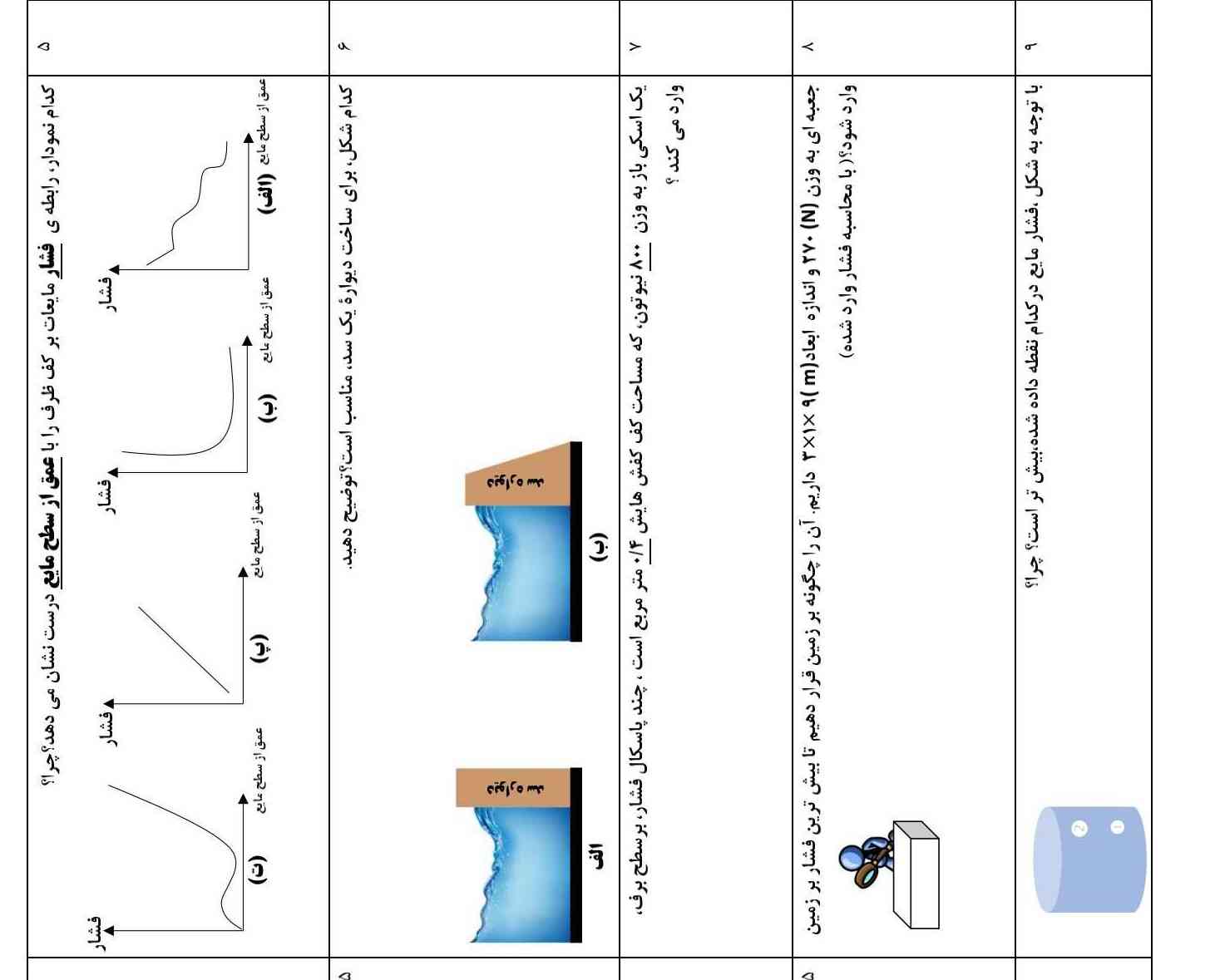
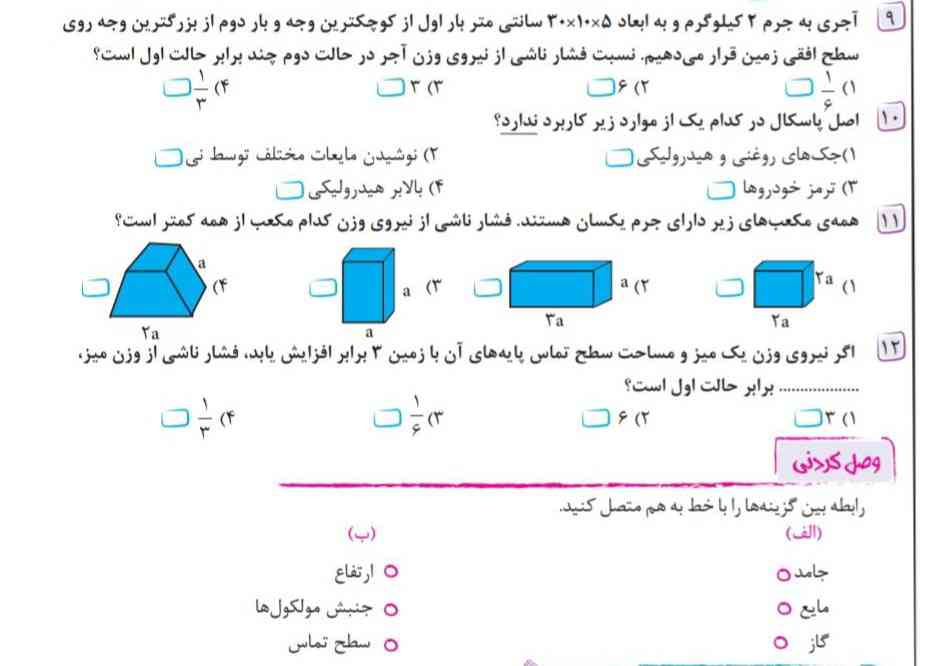
1. **Question 9**: "According to the provided graphs, which graph correctly represents the relationship between pressure and depth in liquids, and why?"
- The correct graph is option (ج) because, according to the principle of pressure in fluids, the pressure increases linearly with the depth. This means that as you go deeper into the liquid, the pressure increases proportionally. The graph (ج) shows this linear relationship.
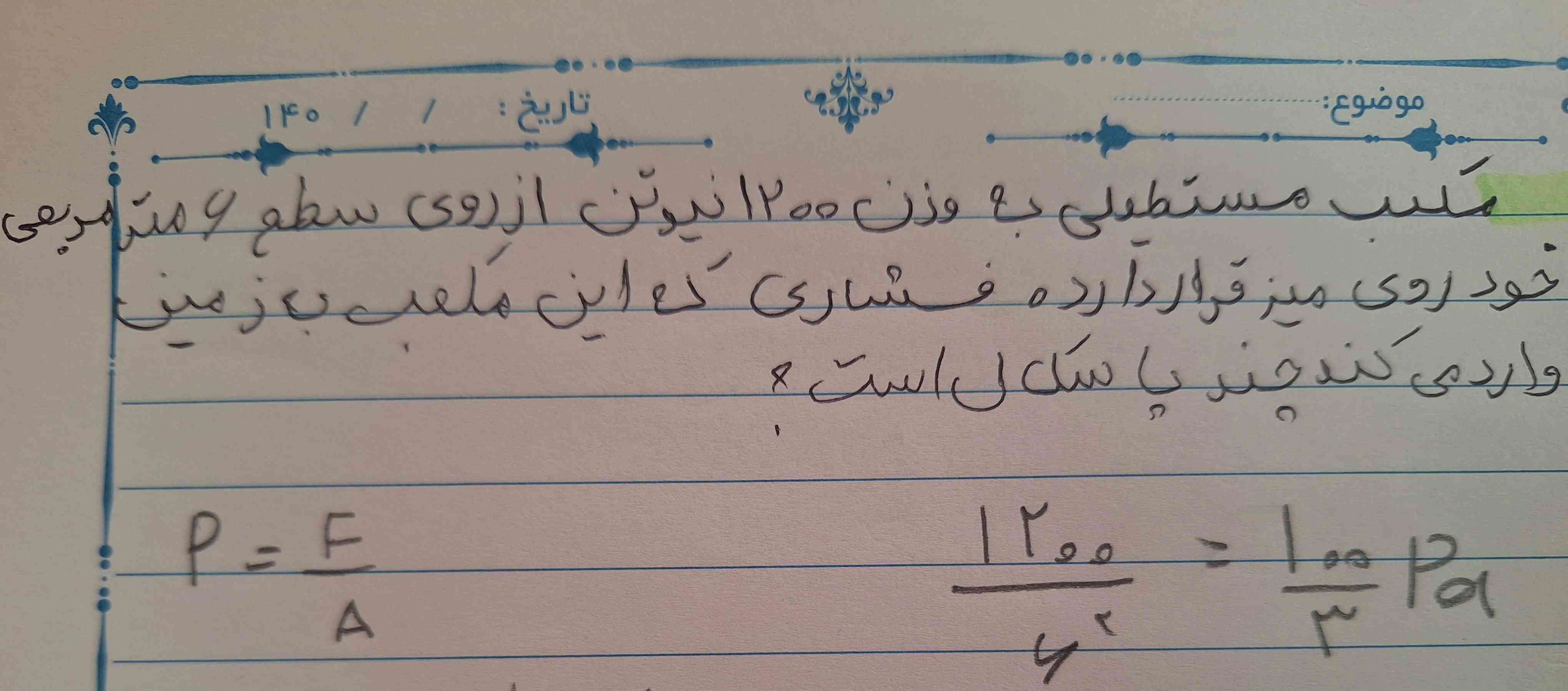
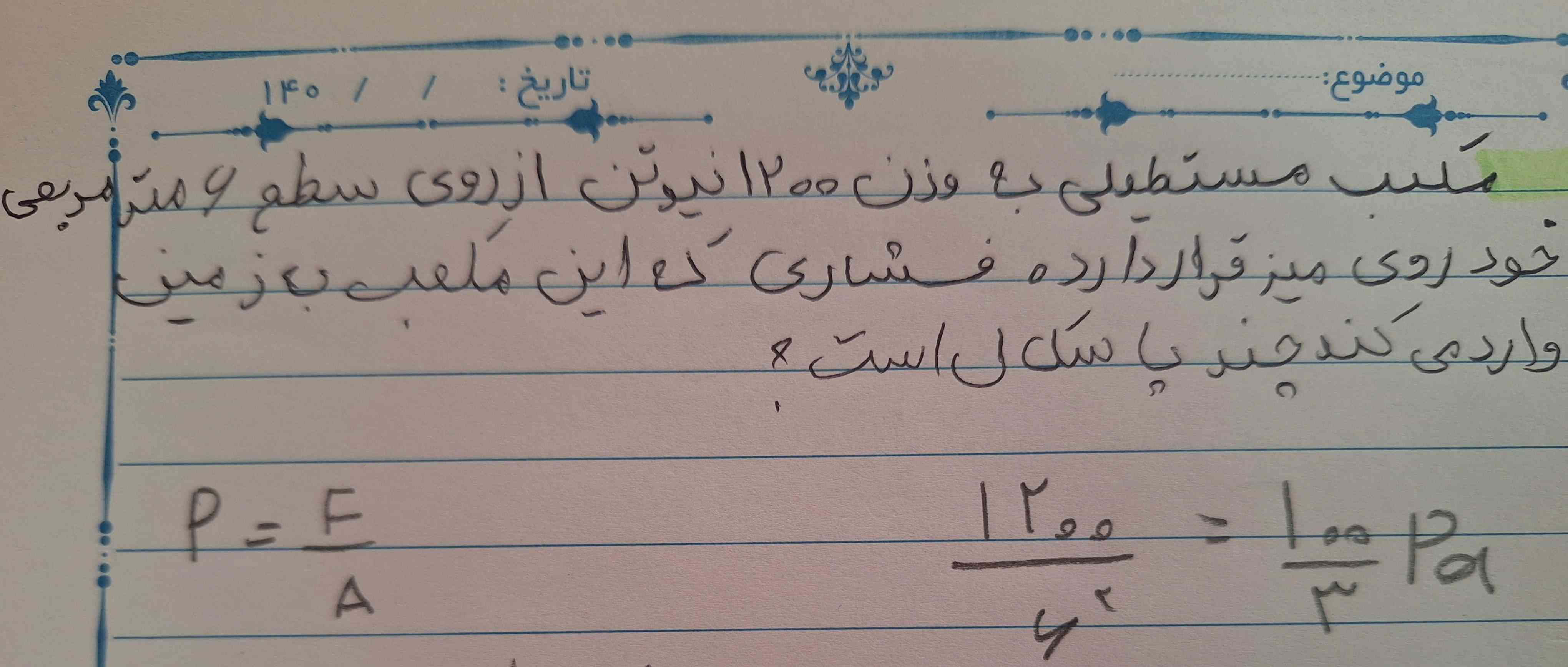
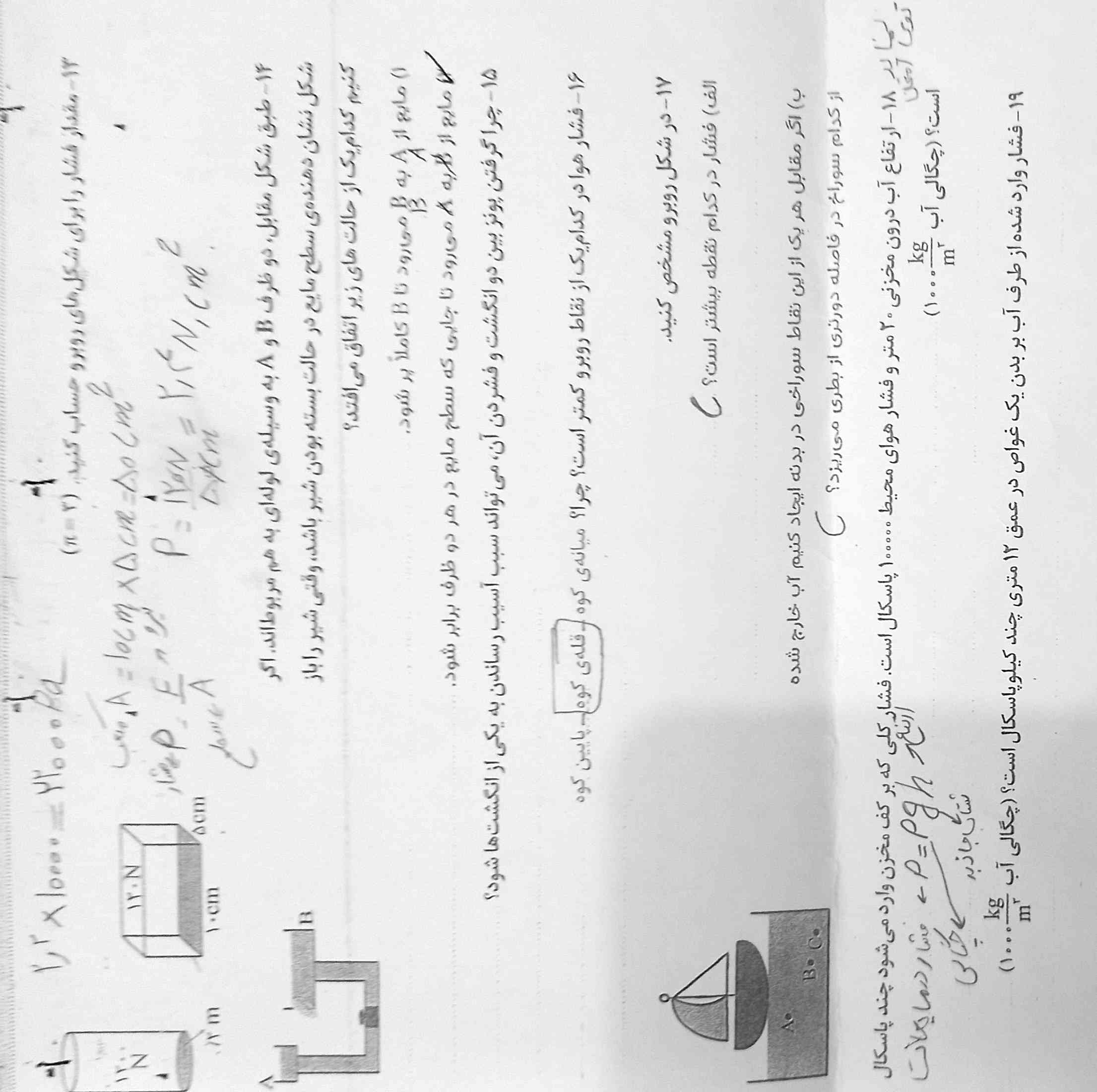
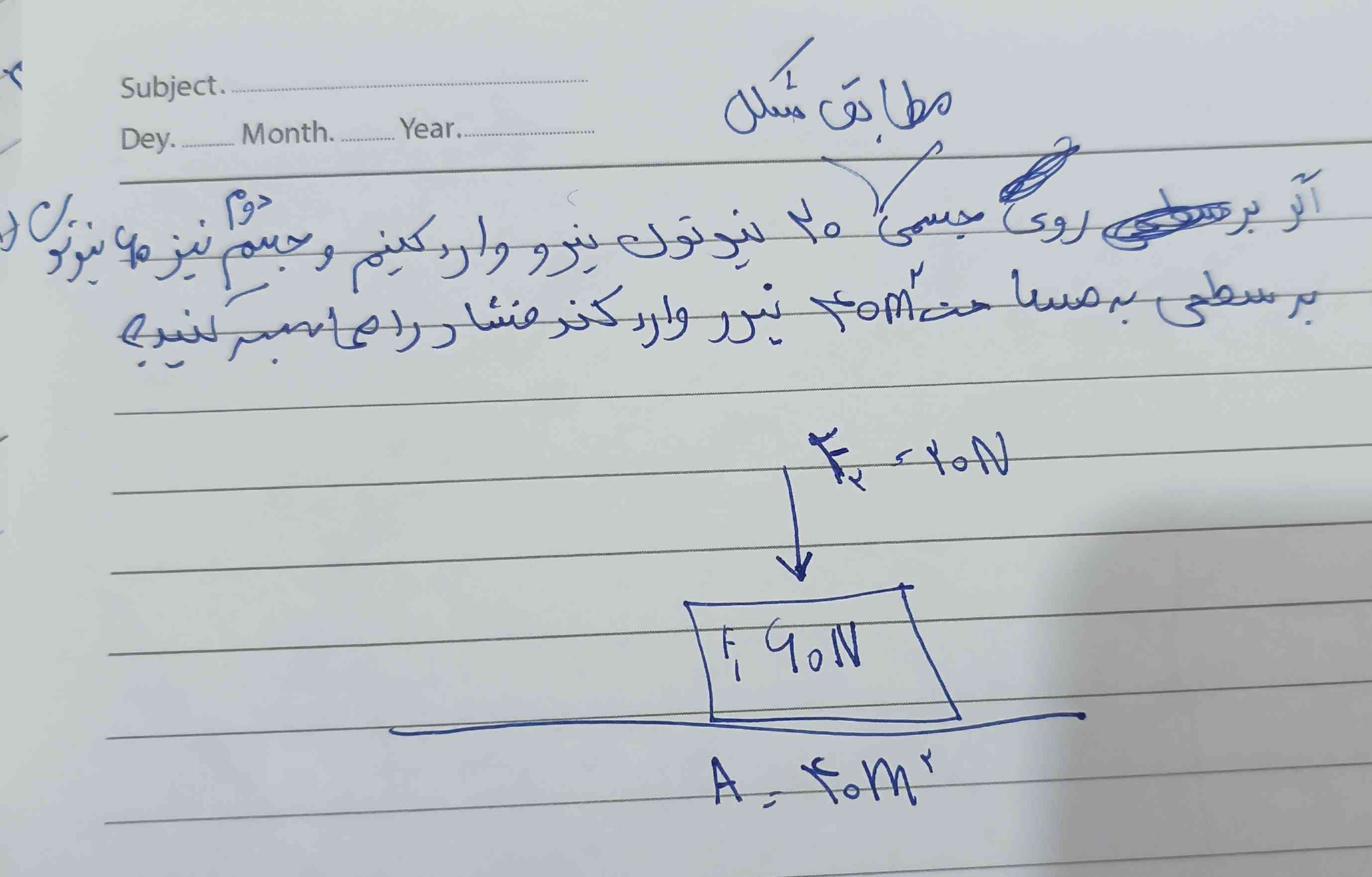
2. **Question 8**: "Given a weight of \( 1200 \, \text{N} \) and base dimensions of \( 3 \times 2 \times 0.9 \, \text{m} \), calculate the pressure and explain its importance."
- First, calculate the area of the base: \( \text{Area} = 3 \times 2 = 6 \, \text{m}^2 \).
- Then, calculate the pressure: \( \text{Pressure} = \frac{1200 \, \text{N}}{6 \, \text{m}^2} = 200 \, \text{Pa} \).
- This calculation shows the pressure exerted by the block on the ground. It's important for understanding how the weight is distributed over the ground, which is crucial for stability and safety considerations.
3. **Question 7**: "An ice skater with a weight of \( 800 \, \text{N} \) skates on ice. How much pressure is exerted?"
- Assume the contact area of the skates is small. If we assume an arbitrary area (because it's not given), the relationship shows that the smaller the area, the greater the pressure exerted.
- This illustrates why ice skates can cut through the ice because they exert high pressure due to their small contact area, allowing for smooth skating.
4. **Question 6**: "Which shape is suitable for building a dam and why?"
- Shape (الف) is suitable for constructing a dam. This shape is wide at the base and narrower at the top. Dams need to withstand high water pressure at the bottom, so they are designed to be wider at the base to provide stability and support against the huge pressure exerted by the water.
This explanation provides a comprehensive understanding of concepts related to pressure in fluids, which are essential for various applications in daily life and engineering.